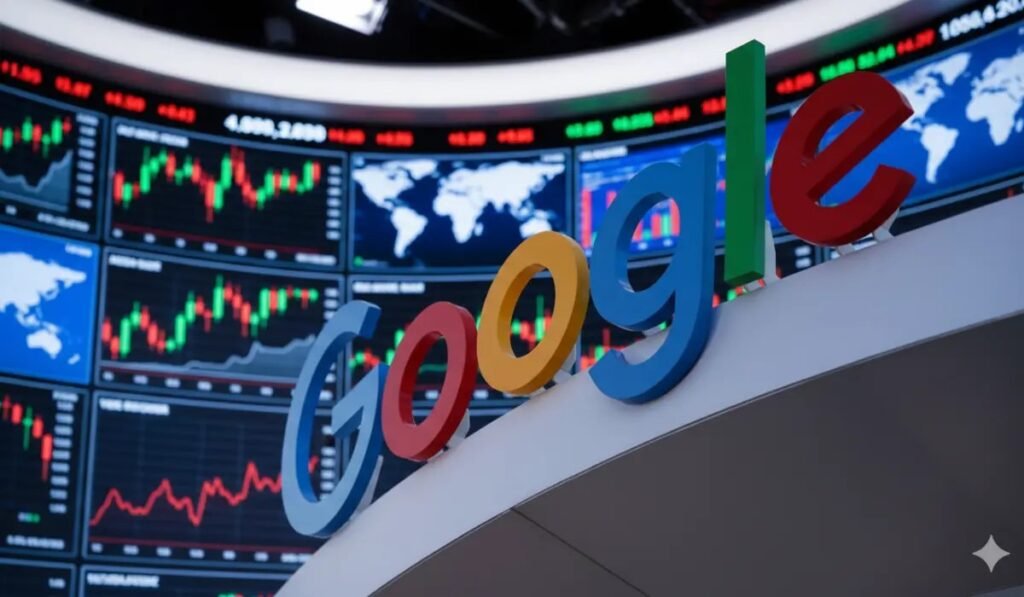
Shares of Alphabet Inc. (NASDAQ: GOOGL) are once again grabbing Wall Street’s attention — and this time, it’s not just about search or ads.
The tech giant is rapidly transforming into one of the most powerful forces in artificial intelligence and cloud infrastructure.
Alphabet stock closed at $314.98, climbing $12.13 (+4.01%) on February 20. The surge reflects growing investor confidence that Alphabet is no longer just competing in AI — it’s building the foundation of it.
What’s driving this renewed momentum? One word: Google Cloud.
Google Cloud’s 48% Growth Signals a Major AI Shift
Google Cloud just reported 48% year-over-year revenue growth — a figure that surprised many analysts and outpaced several major competitors.
This isn’t just growth. It’s a signal.
Google Cloud is evolving from a traditional cloud storage provider into a full-scale AI infrastructure engine. Businesses are no longer just storing data — they are deploying generative AI tools, training large language models, and running advanced analytics at scale.
Analysts note that this 48% expansion surpasses growth rates at Microsoft Azure and Amazon Web Services, highlighting strong enterprise demand for AI-powered solutions.
Companies are increasingly choosing Google Cloud to run AI workloads powered by Gemini models and custom-built silicon — a move that positions Alphabet at the center of the enterprise AI boom.
During the Q4 earnings call, CEO Sundar Pichai revealed a striking statistic:
Revenue from AI solutions built by partners surged nearly 300% year-over-year, while commitments from top software partners jumped more than 16 times.
That’s not incremental growth — that’s acceleration.
Gemini 3: The Engine Behind the Expansion
At the core of Alphabet’s AI strategy is Gemini 3 and its enterprise-grade model, Gemini 3.1 Pro.
These advanced AI systems are powering both consumer and enterprise adoption.
Gemini technology is integrated into Google’s ecosystem and is also strengthening partnerships with Apple, enhancing AI-driven features across major platforms.
At the same time, AI-powered tools like AI Overviews and Circle to Search are increasing user engagement within Google Search — reinforcing the company’s advertising revenue engine while improving user experience.
This dual strategy — enterprise cloud growth plus consumer AI integration — creates multiple revenue streams from a single AI backbone.
The TPU Advantage: Alphabet’s Secret Weapon
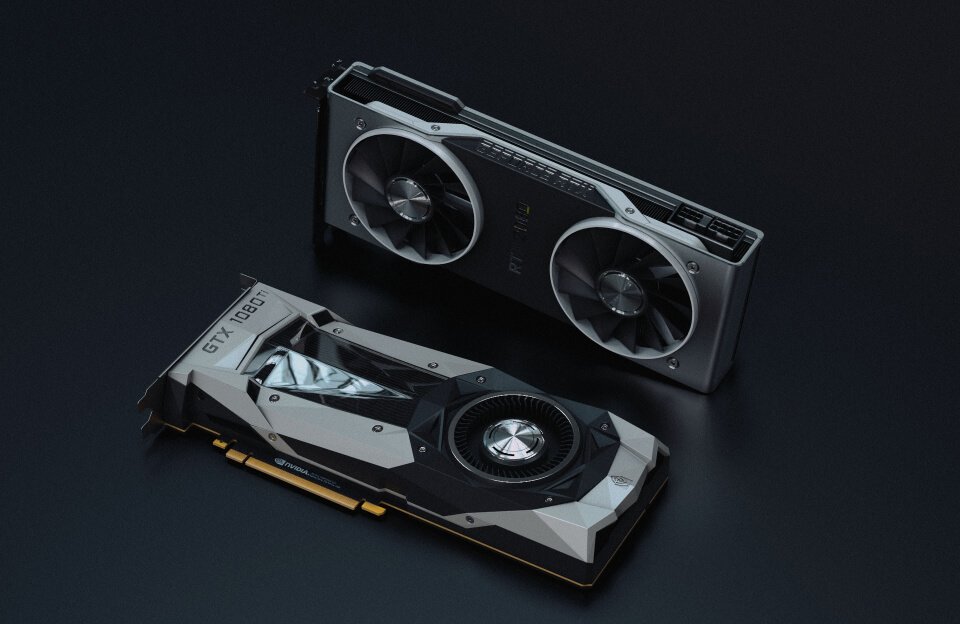
Unlike many competitors that rely heavily on Nvidia GPUs, Alphabet designs its own AI chips — known as Tensor Processing Units (TPUs).
This vertical integration gives Alphabet something powerful: control.
From custom chips (TPUs) to AI models (Gemini) to cloud distribution (Google Cloud) to monetization (Search and Ads), Alphabet owns nearly the entire value chain.
Most AI competitors depend on third-party hardware. Alphabet doesn’t.
That self-sufficiency lowers long-term costs, improves performance optimization, and enhances margins — a strategic edge that investors are beginning to recognize.
The company plans to invest between $175 billion and $185 billion through 2026 in AI data centers and infrastructure — a bold commitment that signals long-term confidence.
A $4 Trillion Company — But Still Attractive?
Alphabet recently crossed the $4 trillion market cap milestone, joining the elite tier of global tech giants.
Despite this surge, shares trade at a forward P/E ratio of roughly 27x to 29x, which some analysts view as reasonable compared to other AI-focused peers.
As a member of the “Magnificent Seven” — alongside Apple, Microsoft, Amazon, Nvidia, Meta, and Tesla — Alphabet is increasingly seen not just as a participant in the AI race, but as one of its architects.
Headquartered in Mountain View, California, Alphabet is reshaping its identity.
No longer just a search and advertising powerhouse, the company now sits at the intersection of generative AI, cloud computing, and custom silicon innovation.
Its end-to-end model — chips, models, cloud, and monetization — may prove to be the structural advantage that defines the next decade of AI leadership.